SPACE WARS AND TREATIES: ERA OF SPACE AS A WAR-FIGHTING DOMAIN
Conference on Space Warfare, International Space Law and Treaties, Strategic Security, and the Evolving Role of Outer Space as a War-Fighting Domain
Date: 04 December 2026 Venue: MERI Group of Institutions, New Delhi Campus Organized by: MERI Department of Space Studies (MERI DSS) and Space Industry Association of India (SIA-India)
About the Conference
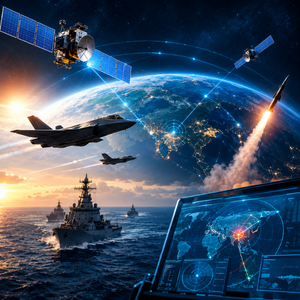
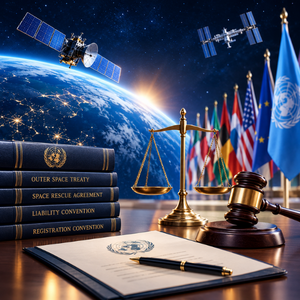
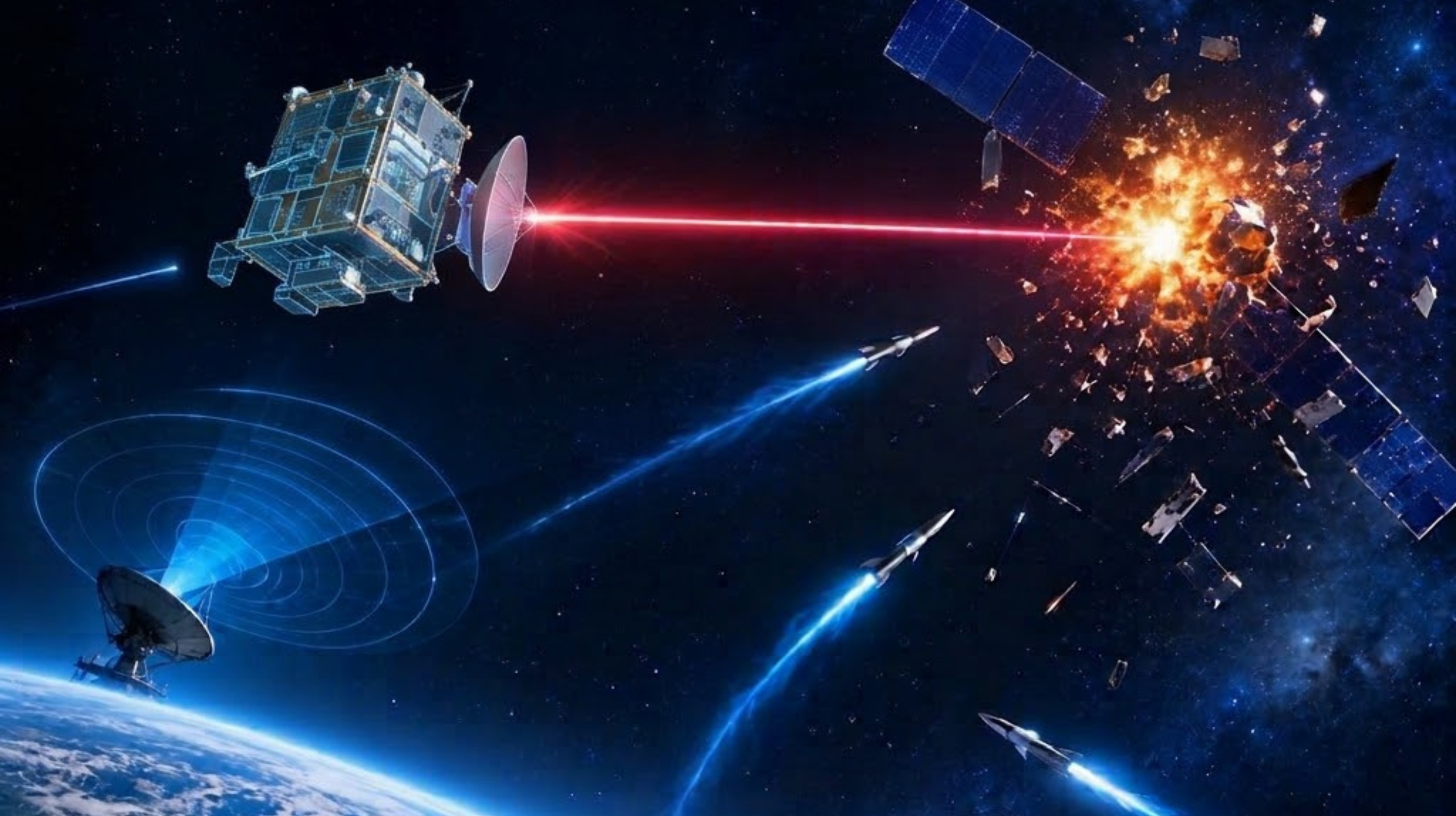
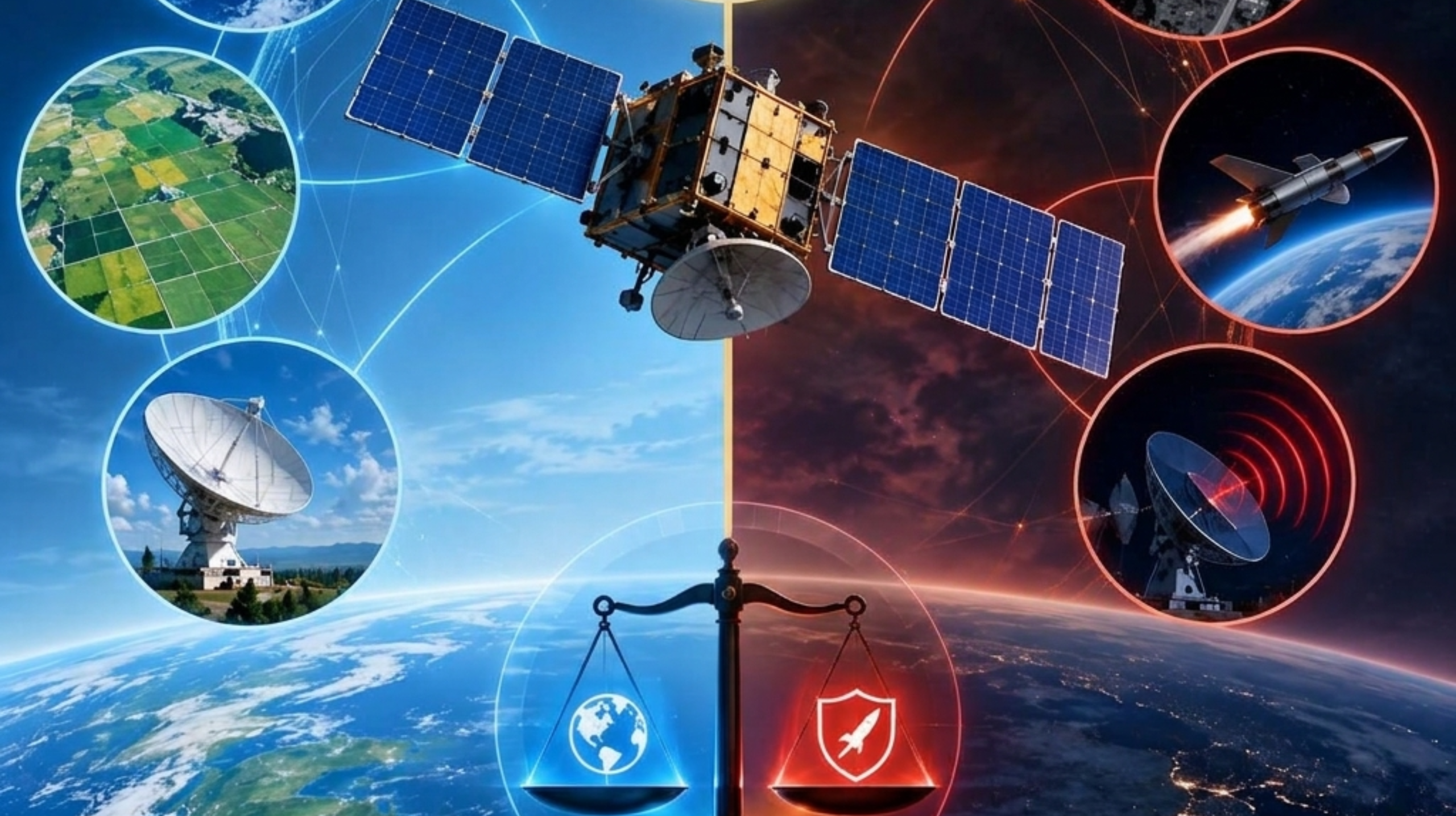
Outer space has evolved from a domain of exploration and scientific advancement into an increasingly contested war-fighting environment. Major global powers, including the United States, China, Germany, Japan, and India, have established doctrines recognising orbit as an operational military domain. The growing deployment of counter-space capabilities and integration of commercial satellite networks into military operations have raised concerns about space security, strategic competition, and international law. In September 2026, the Pentagon publicly acknowledged the deployment of on-orbit space control weapons for offensive and defensive counter-space operations. With approximately 15,900 functioning satellites among 47,000 tracked objects, orbital congestion and debris present additional challenges. The 1967 Outer Space Treaty prohibits weapons of mass destruction in orbit but leaves significant legal uncertainties concerning conventional and non-kinetic space weapons. The conference “Space Wars and Treaties: Era of Space as a War-Fighting Domain” will bring together military strategists, policymakers, space-law scholars, researchers, industry professionals, academicians, and students to examine emerging threats, evaluate existing treaty frameworks, and explore practical measures for peaceful coexistence in orbit. With India’s space-defence priorities as a key reference point, the discussions will focus on strategic autonomy, indigenous capabilities, international cooperation, and effective legal and policy frameworks.
Register Now
Our Speakers
Prof Lalit Aggarwal
Vice President, MERI Group of Institutions
Lt Gen PJS Pannu (Retd.)
PVSM, AVSM, VSM, PhD Chief Mentor & Dean, Department of Space Studies, MERI Group of Institutions
Maj Gen Manjeet Singh Mokha (Retd.)
SM, VSM, PhD Professor & Head - Skilling Division, Department of Space Studies,
MERI Group of Institutions
Shri Ashok Venkateshmurthy
Partner at Allied Law Practices, Bengaluru
Dr. Shrawani Shagun
Research Fellow at the Centre for Aerospace Power and Strategic Studies (CAPSS)
Maj Gen Ravi Kumar Chaudhary (Retd.)
VSM Founder & CEO, Eclat DigiStrat Advisors
Col Anurag Awasthi (Retd.)
CEO EVMPL & Executive Director MEDEPC
Shri Mohit Mongia
Technical Director, NXP Semiconductors
Shri Yogesh Shinde
Site Lead, LuminASIC, Ahmedabad Center
Event Schedule
Who Should Attend
Military strategists, space operations professionals, and doctrine planners
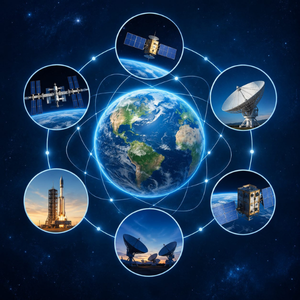
Space-systems architects, orbital mechanics specialists, and space situational awareness researchers
Satellite, launch, and aerospace industry professionals
Scientists and systems engineers from ISRO, DRDO, and the Defence Space Research Agency
Armed forces representatives, including the Defence Space Agency and the three Services
Space-technology and defence startups, entrepreneurs, and innovators
Academicians and scholars in space law, international relations, aerospace engineering, and cybersecurity
Students interested in space technology, defence, international law, and related disciplines
Representatives from the Ministry of Defence, Ministry of External Affairs, Department of Space, IN-SPACe, and NITI Aayog policy divisions
Scope of the Conference
The conference will examine the technological, strategic, legal, and policy dimensions of space as a war-fighting domain, addressing emerging threats, international regulations, orbital safety, military applications, and India’s space-defence priorities.
Space Warfare and Military Doctrine
Examine the strategic and technological aspects of space warfare, India’s Joint Military Space Doctrine, and the role of satellites in ISR, navigation, communications and targeting. Discuss India’s experience during Operation Sindoor (May 2025).
International Space Law and Treaty Frameworks
Explore the Outer Space Treaty, Liability and Registration Conventions, international humanitarian law and UN efforts to prevent an arms race in outer space. Assess legal gaps concerning conventional counter-space weapons and non-kinetic operations.
Commercial Satellites and Dual-Use Dilemmas
Examine the military use of commercial satellite constellations, including Starlink, and the legal status of civilian infrastructure used for military purposes. Discuss their potential classification as military targets under international humanitarian law.
Orbital Debris and Satellite Proliferation
Assess debris generated by counter-space tests conducted by the United States, Russia, China and India. Examine the lack of a binding treaty prohibiting debris-generating military tests and the challenges of orbital congestion.
Regulatory Gaps, Attribution and Liability
Assess the Outer Space Treaty’s limitations in verifying orbital weapons violations and attributing hostile actions. Examine debris liability, conventional counter-space systems, and Articles 2(4) and 51 of the UN Charter.
Domestic Space Regulation and Confidence-Building Measures
Examine the Indian Space Policy 2023, IN-SPACe guidelines and the need for a comprehensive Domestic Space Activities Act covering authorisation, insurance and liability. Discuss launch notifications, proximity codes and incident communication channels.
National Launch Capacity and Indigenous Manufacturing
Explore India’s satellite and launch capabilities, including SBS-3 and the reported transfer of SSLV technology to industry. Examine responsive launches and constellation replenishment during emergencies.
Domestic Supply Chains and Resilient Constellations
Discuss indigenous satellite buses and proliferated LEO architectures for protecting critical assets. Examine IN-SPACe’s February 2026 Satellite Bus as a Service grants to Dhruva Space, Astrome and Azista.
International Cooperation and Multilateral Processes
Examine India’s engagement with the UN Open-Ended Working Group on space arms control (2025–2028). Discuss international cooperation, debris liability, transparency, verification and measures to prevent accidental escalation in orbit.
Objectives of the Conference
Analyse Space Warfare
Examine the technological and strategic dimensions of space as an active war-fighting domain, including India’s Joint Military Space Doctrine and the growing military dependence on satellite infrastructure.
Navigate Dual-Use Dilemmas
Explore the legal status and military integration of commercial satellite constellations during armed conflict, particularly the implications for civilian infrastructure and International Humanitarian Law.
Evaluate International Law
Assess the adequacy of the 1967 Outer Space Treaty and UN legal frameworks in regulating non-kinetic weapons, conventional counter-space systems, orbital violations, and emerging legal grey areas.
Foster Collaboration
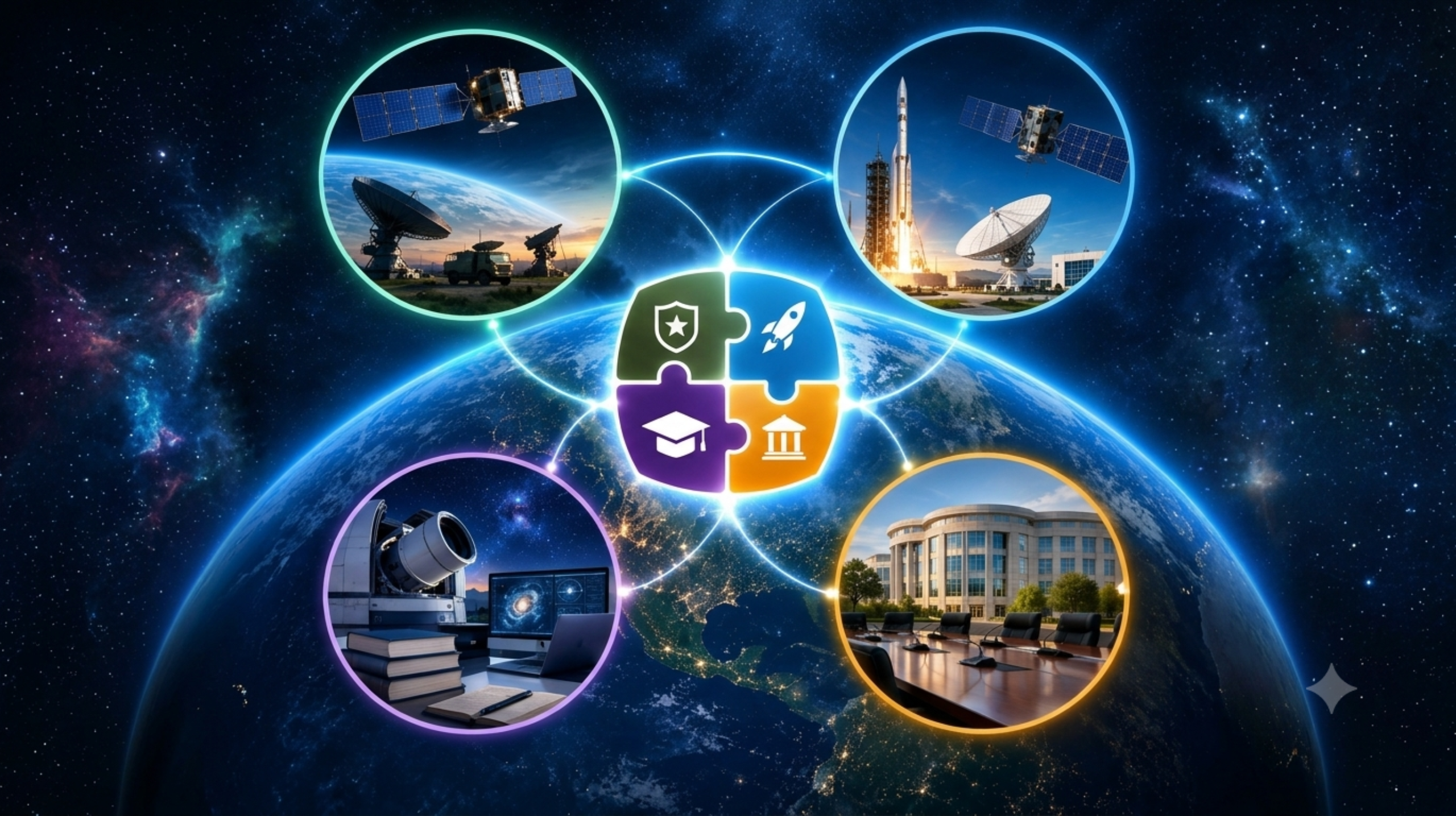
Promote interdisciplinary partnerships across the military, commercial space industry, academia, and policy sectors to strengthen space security, share expertise, and address emerging strategic challenges.
Formulate Policy Solutions
Develop a comprehensive policy brief outlining practical transparency and confidence-building measures (TCBMs) to mitigate accidental orbital escalation, including launch notifications, proximity codes, and incident communication channels.
Venue
MERI Group of Institutions, Janakpuri, New Delhi Organized by: MERI Department of Space Studies