Conference – Planet Earth in Space Age: Climate change, Natural Disasters & Planetary Resilience
Date: 17th April, 2026 Venue: MERI Group of Institutions, Janakpuri, New Delhi Organized by: MERI Department of Space Studies and Space Industries Association of India (SIA-India)
About the Conference
The conference is a national-level initiative focused on understanding climate change, natural disasters, and planetary resilience through the application of space-based technologies. With advancements in satellite systems, remote sensing, and geospatial analytics, space research now plays a critical role in monitoring Earth’s environmental systems.
The planet is currently facing major challenges including rising global temperatures, biodiversity loss, extreme weather events, and ecosystem degradation. Space technology, combined with artificial intelligence, big data, and geospatial intelligence, enables accurate climate monitoring, disaster prediction, and environmental analysis.
This conference serves as a platform for scientists, policymakers, researchers, and industry experts to collaborate, exchange knowledge, and develop actionable strategies for sustainable environmental management and planetary resilience.
Where
MERI Group of Institutions, Janakpuri, New Delhi
When
17th April, 2026
Register Now
Event Schedule
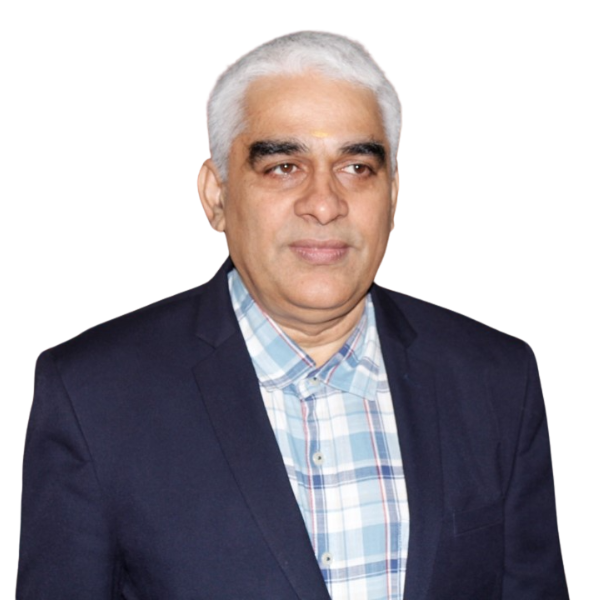
Our Speakers
Prof Lalit Aggarwal
Vice President, MERI Group of Institutions
Shri Pawan Kapur
Board Member, SIA - India
Lt Gen (Dr) PJS Pannu (Retd.)
Professor & Chief Mentor, MERI Department of Space Studies
Shri Ravi Ailawadhi
Regional Director, South Asia, Methera Global Communications Limited
Dr Krishnan Raghavan
Former Director, Indian Institute of Tropical Meteorology (IITM) Pune
Dr DRM Samudraiah
Former Outstanding Scientist, Space Applications Centre (SAC)
Prof Sagnik Dey
Head - Centre for Atmospheric Sciences, IIT Delhi
Dr D R Pattanaik
Scientist G, IMD
Dr. Anoop S. Mahajan
Scientist F, Centre for Climate Change Research, Indian Institute of Tropical Meteorology, (IITM) Pune
Col Tavinder Thind
Dr. C.V.S. Kiran
Co-Founder and CEO, Red Balloon Aerospace0
Air Cmde Himanshu Gopal
Who Should Attend
Universities & Research Institutions
Government & Policy Makers
Space & Technology Experts
Environmental & Climate Scientists
Industry Leaders & Innovators
Scope of the Conference
The conference will comprehensively explore how space and allied technologies can support environmental sustainability and disaster resilience through the following focus areas:
Geospatial Data and Environmental Analytics
Sessions will highlight the use of geospatial intelligence and remote sensing for analyzing land use, ecosystems, and environmental changes.
Earth Observation and Climate Monitoring
Discussions will focus on satellite-based tracking of climate variables such as temperature, greenhouse gases, sea-level rise, and glacier changes.
Integration of Allied Technologies
The role of artificial intelligence, big data, IoT, and GIS in enhancing environmental monitoring and predictive analytics will be explored.
Satellite-Based Disaster Management
The conference will examine how space technology enables early warning systems, real-time monitoring, and post-disaster assessment for natural disasters.
Planetary Resilience and Sustainability Strategies
The event will focus on developing long-term strategies for environmental protection, climate adaptation, and sustainable resource management.
Objectives of the Conference
Promote Climate and Environmental Awareness
To enhance understanding of climate change, ecosystem dynamics, and planetary systems using space-based data.
Strengthen Disaster Management Capabilities
To explore advanced satellite-based systems for disaster prediction, monitoring, and response.
Enable Data-Driven Decision Making
To encourage the use of geospatial intelligence and analytics in environmental policy and planning.
Support National Development Goals
To align with initiatives such as NITI Aayog’s Viksit Bharat @2047 vision for sustainable growth and resilience.
Foster Collaboration Across Sectors
To bring together academia, government, and industry for integrated solutions in climate and environmental challenges.
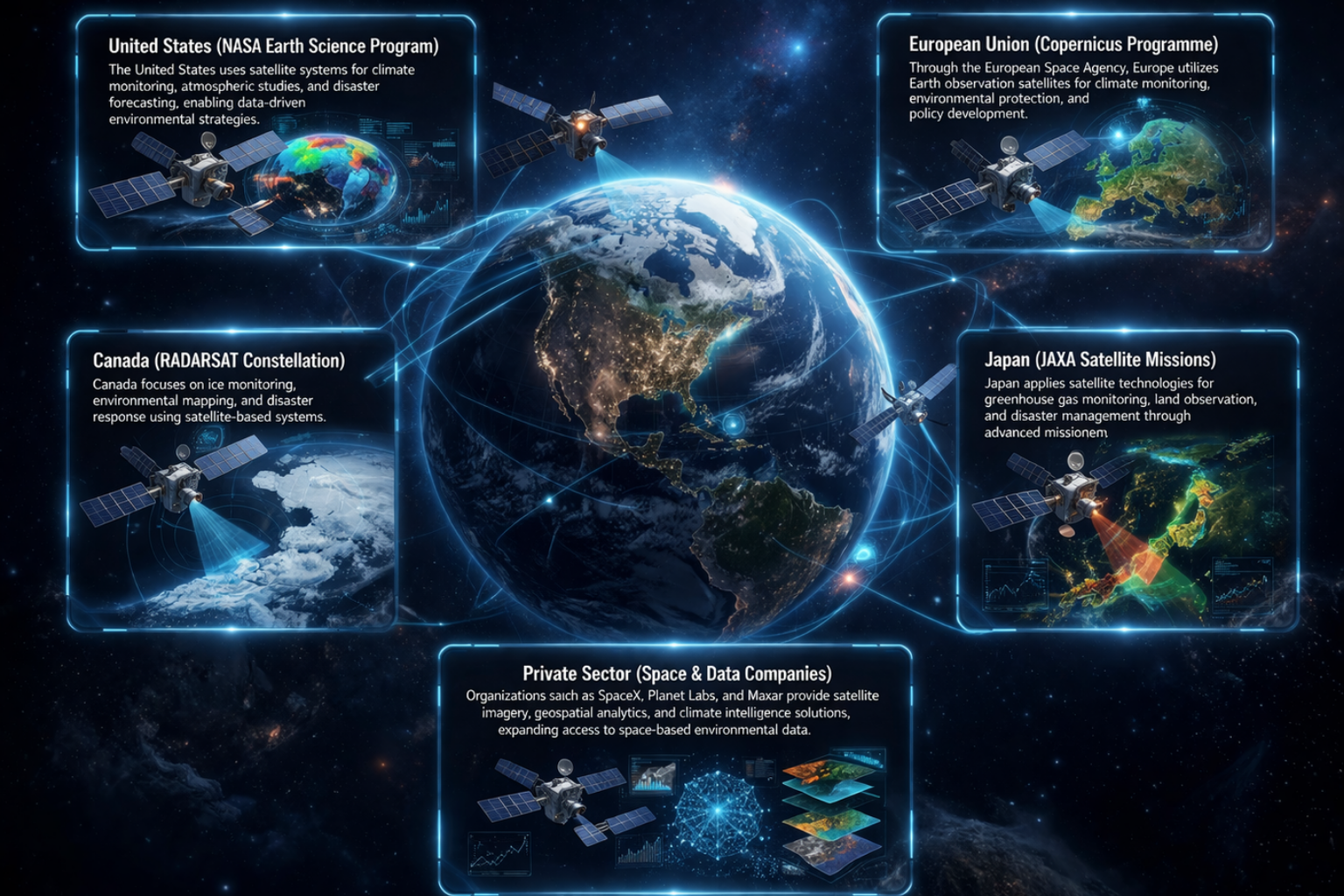
Adoption of Space and Allied Technologies by Developed Nations
Several developed nations are leveraging space technologies to address climate change, disaster management, and environmental monitoring at scale. These models provide valuable insights for India’s evolving space ecosystem.
United States (NASA Earth Science Program)
The United States uses satellite systems for climate monitoring, atmospheric studies, and disaster forecasting, enabling data-driven environmental strategies.
European Union (Copernicus Programme)
Through the European Space Agency, Europe utilizes Earth observation satellites for climate monitoring, environmental protection, and policy development.
Japan (JAXA Satellite Missions)
Japan applies satellite technologies for greenhouse gas monitoring, land observation, and disaster management through advanced missions.
Canada (RADARSAT Constellation)
Canada focuses on ice monitoring, environmental mapping, and disaster response using satellite-based systems.
Private Sector (Space & Data Companies)
Organizations such as SpaceX, Planet Labs, and Maxar provide satellite imagery, geospatial analytics, and climate intelligence solutions, expanding access to space-based environmental data.
Venue
MERI Group of Institutions, Janakpuri, New Delhi Organized by: MERI Department of Space Studies and Space Industries Association of India (SIA-India)