





About the Conference
Farmtech India 2026 is a national-level conference aimed at transforming Indian agriculture through the strategic use of space-based and allied technologies. In alignment with NITI Aayog’s vision of doubling farmers’ income through sustainable and technology-driven growth, the conference seeks to bridge the gap between traditional farming practices and modern innovations.
Indian agriculture today faces multiple challenges including climate uncertainty, soil degradation, water scarcity, pest infestations, and inefficient supply chains. Space technology combined with AI, IoT, drones, and data analytics offers powerful solutions to enhance farm productivity, resilience, and profitability. This conference serves as a platform for dialogue, collaboration, and action among all key stakeholders.
Where
MERI Group of Institutions,
Janakpuri, New Delhi Campus
When
Tuesday, 17 February, 2026
Register Now
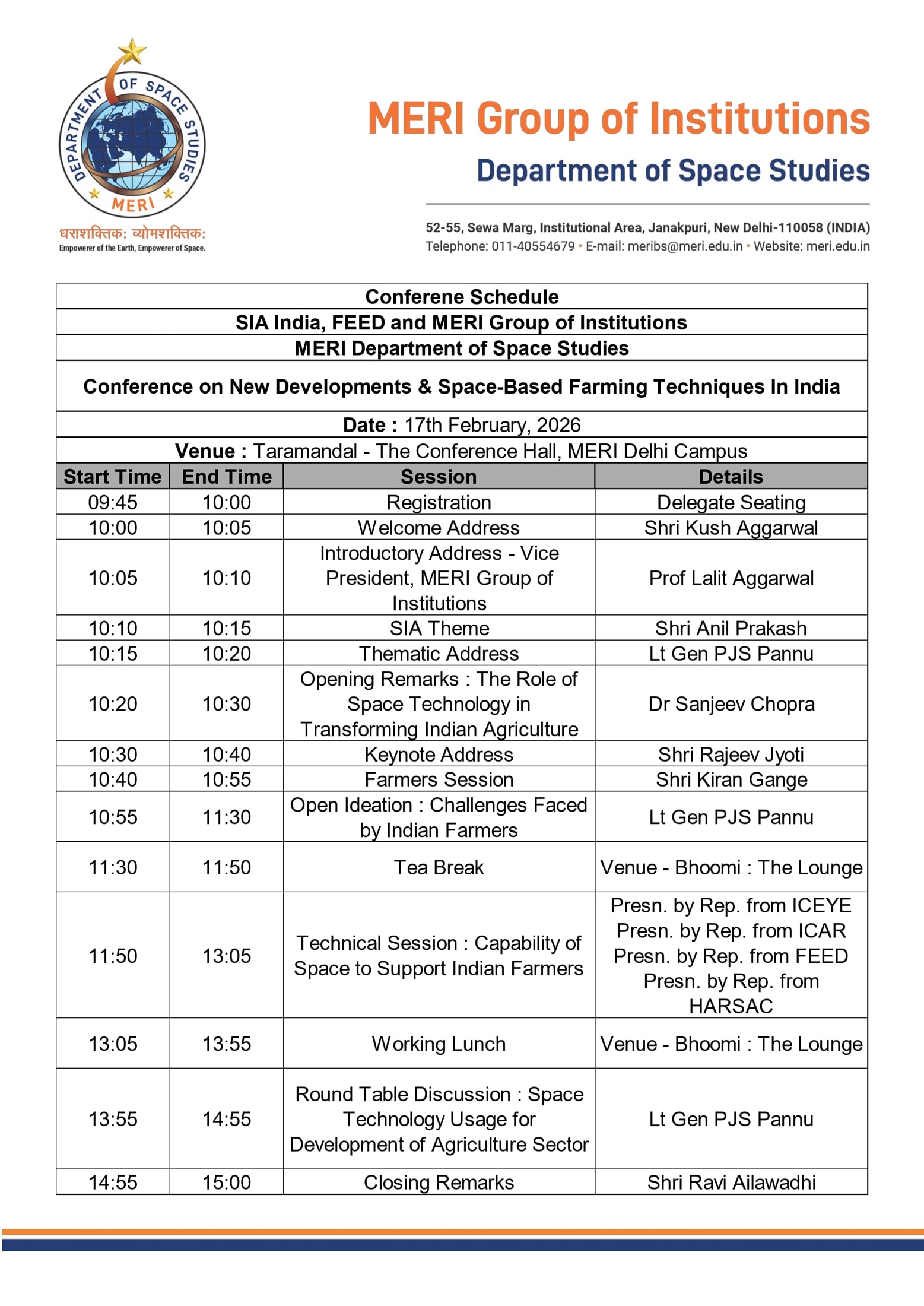
Event Schedule
Our Speakers
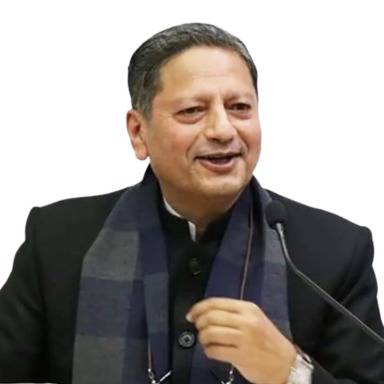
Prof Lalit Aggarwal
Vice President, MERI Group of Institutions, New Delhi, India
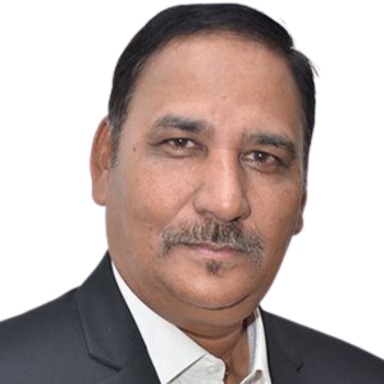
Dr Sanjeev Chopra
IAS (Retd.)
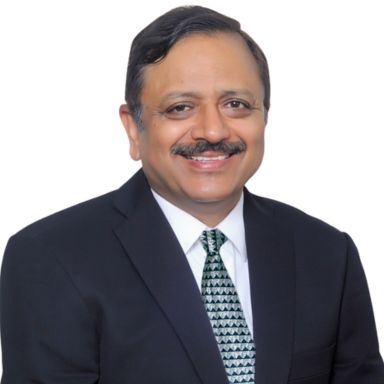
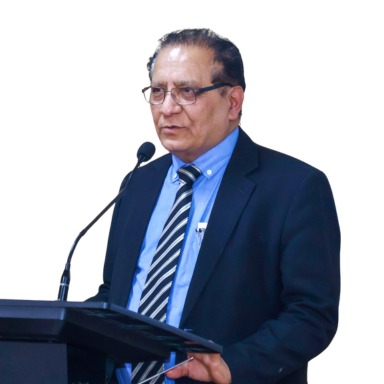
Shri Rajeev Jyoti
Director Technical, IN-SPACe, Govt of India
Shri Anil Prakash
Director General, SIA-India
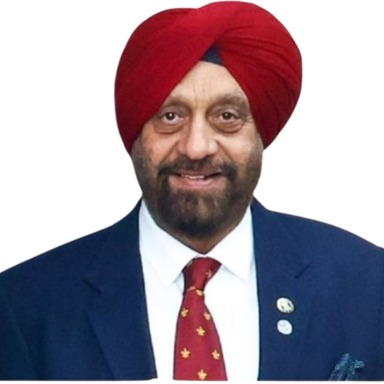
Lt Gen (Dr) PJS Pannu (Retd.)
Chief Mentor, MERI Department of Space Studies
Shri Ravi Ailawadhi
Regional Director, South Asia, Methera Global Communications Limited
Shri Kiran Gange
CEO and Founder, RapidPricer
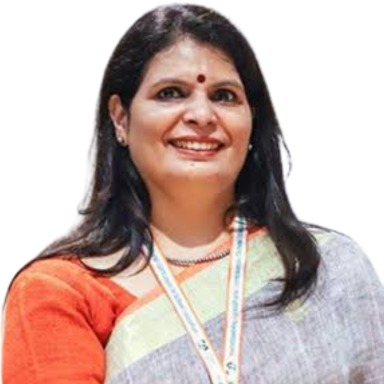
Dr Anshu Bharadwaj
Principal Scientist, ICAR
Shri Ritesh Kumar
Senior Scientist, HARSAC
Shri Vikas Mishra
Business Director, India Evergreen Innovation Platform (EIP)
Shih Shen Wong
Sales Manager for APAC (Government Solutions), ICEYE
Who Should Attend
Agriculture Universities & ICAR Institutes
Central & State Government Officials
Space Sector Experts (ISRO, Startups)
Agri-Tech Innovators & Startups
Scope of the Conference
Farmtech India 2026 will comprehensively explore how space-led and allied technologies can address India’s agricultural challenges through the following focus areas:
Identifying Farmers’ Pain Points
Farmers and farm leaders will share real-time challenges related to climate variability, crop yield optimisation, resource management, and market access through interactive sessions.
Applications of Space Technology in Agriculture
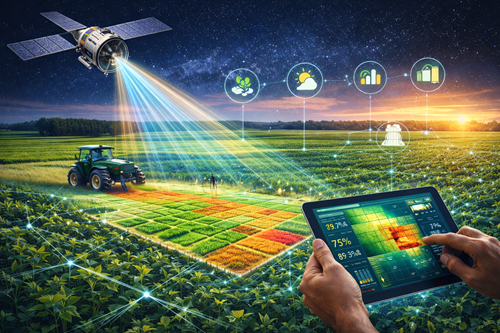
Discussions will highlight the use of satellite-based tools such as remote sensing for crop health monitoring, GIS for land mapping, and satellite-enabled weather forecasting using systems like INSAT and RISAT.
Integration of Allied Technologies
Policy and Implementation Roadmap
Objectives of the Conference
Educate and Empower Farmers
Facilitate Knowledge Exchange
To create a farmer-centric dialogue where challenges are openly discussed and solutions are co-created.
Align with National Priorities
To contribute directly to NITI Aayog’s farmers’ income enhancement initiatives through quick-win, technology-enabled solutions.
Build Long-Term Partnerships
To establish sustainable collaborations between farmers, universities, government bodies, and the space sector.
Promote Inclusivity and Scalability
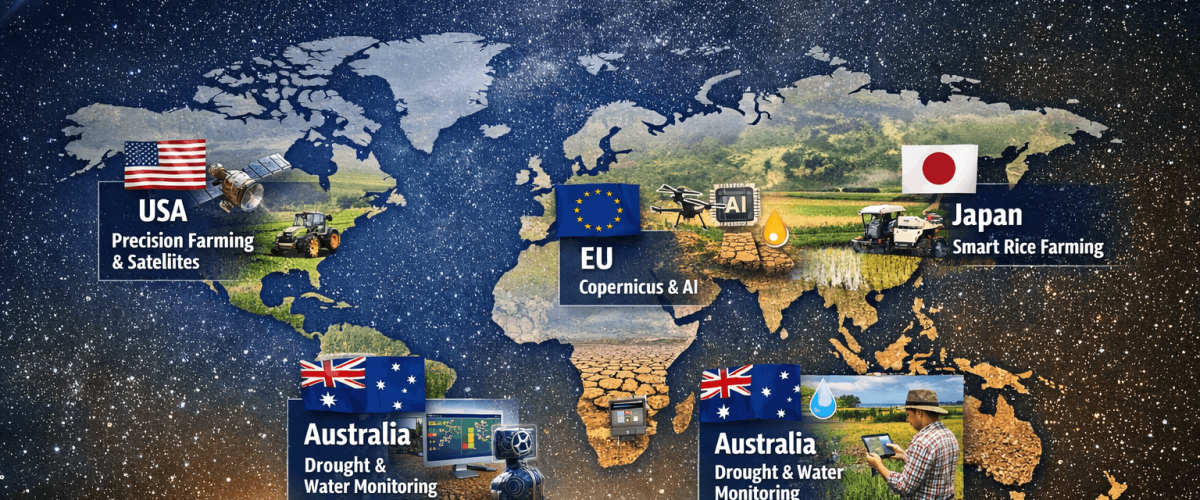
Adoption of Space and Allied Technologies in Agriculture by Developed Nations
Several developed countries have successfully integrated space technology into farming, providing blueprints for India. These examples highlight scalable models that have boosted productivity and incomes:
United States (Precision Farming via Satellites)
European Union (EU's Copernicus Program)
Australia (Drought Management with Space Tech)
Japan (Satellite-Driven Smart Farming)
Venue
📍 MERI Group of Institutions, Janakpuri, New Delhi Campus
🏛️ Organized by: MERI Department of Space Studies
Farmtech India 2026: New Developments & Sapce based Farming Techniques in India
Successfully hosted at MERI, Farmtech India 2026 brought together industry experts, researchers, and policymakers to explore the role of space technologies in accelerating pharmaceutical research.
The conference featured insightful discussions, expert sessions, and collaborative dialogue, reinforcing DSS’s commitment to fostering innovation, research excellence, and interdisciplinary engagement within India’s evolving space and agricultural ecosystem.